
Issue five of The Product Stack. This week: a desktop app framework that finally makes Electron feel optional, a privacy-first file transfer tool, the next chapter of HTMX, the self-hosted LLM UI that everyone is running, a fast-growing community for Claude Code users, and a voxel renderer that has no right being this fun. Let’s get into it.
Tauri
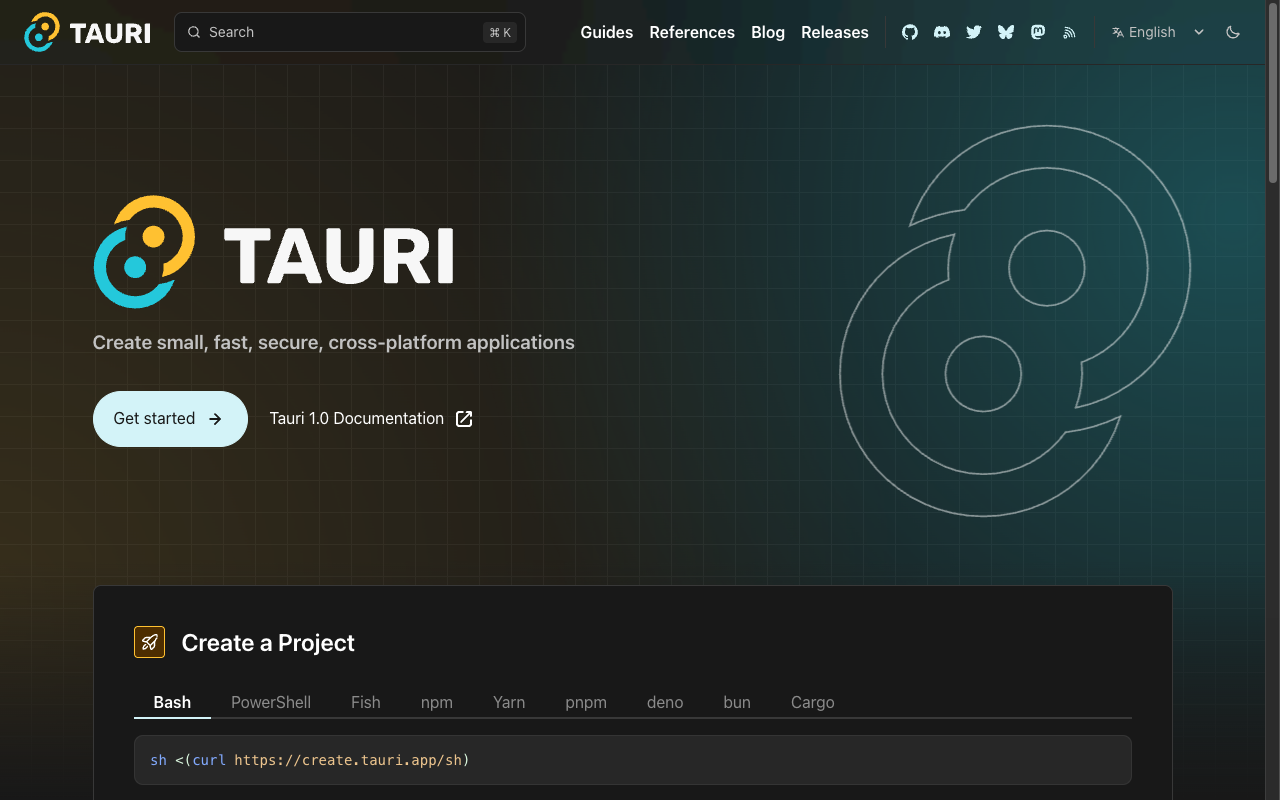
Tauri is a framework for building native desktop and mobile applications using web front-end technologies. Where Electron ships a full copy of Chromium with every app (Eww!), Tauri uses the operating system’s built-in webview and a Rust backend. The result is binaries that are a fraction of the size with a meaningfully smaller attack surface. Tauri 2.0, now stable, extended that story to iOS and Android, making it a credible option for cross-platform app development with a single codebase.
If you’ve been avoiding native apps because Electron felt too heavy, or if you’re shipping internal tooling and don’t want to explain why a simple app is 150MB, Tauri is worth a serious look. The Rust backend is not required knowledge to get started. You can write most of what you need in JavaScript, but the Rust layer is there when you need performance or low-level system access. The community and ecosystem have matured considerably over the past year. This one has moved from interesting experiment to production-ready framework.
SkySend
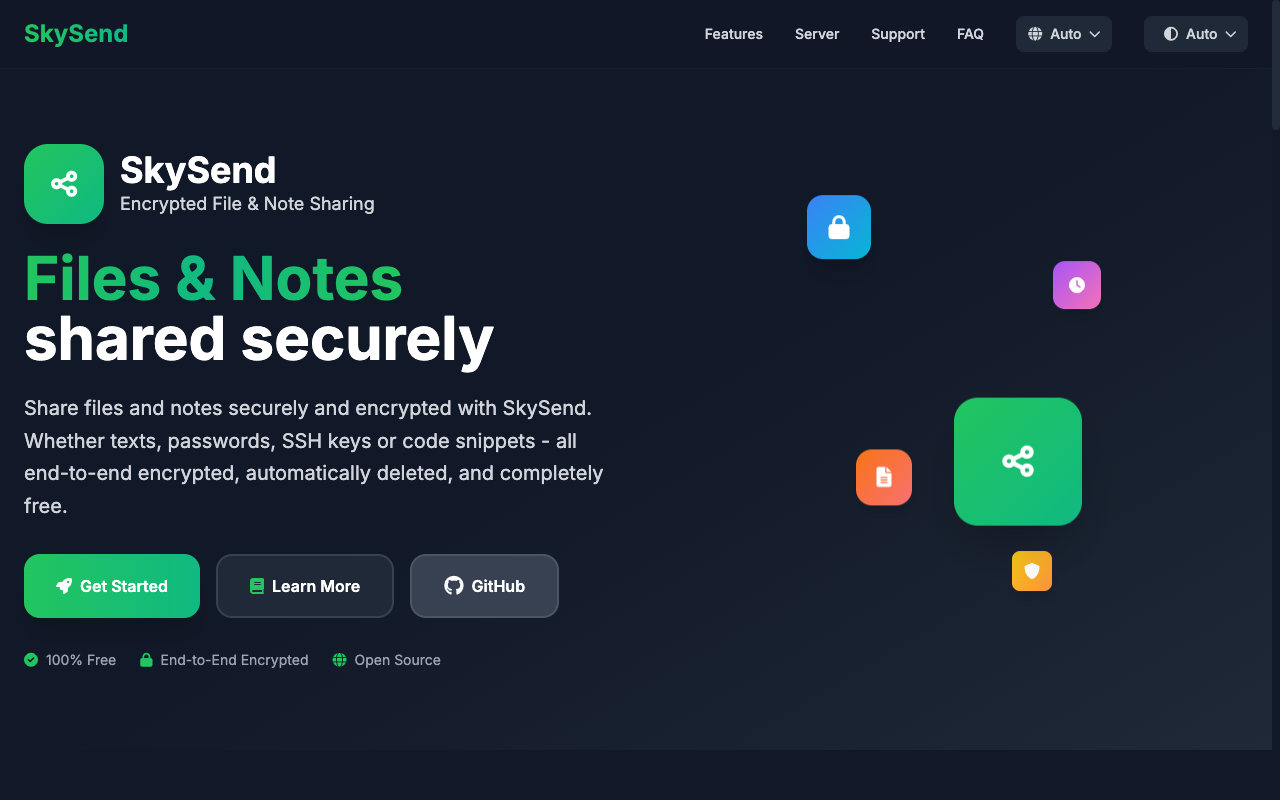
SkySend is a file transfer service from Switzerland built around a simple principle: send a file to someone without either of you creating an account, without the service storing your data longer than necessary, and with end-to-end encryption from the start. Files are deleted automatically after they’re downloaded or after a set expiration window. No registration, no tracking, no lingering metadata.
There are a handful of tools in this space, but SkySend earns its place on the list for being genuinely clean and no-friction. The Swiss jurisdiction and explicit privacy stance make it a better default than most of the alternatives for anything even remotely sensitive. Worth bookmarking for the next time someone asks you to “just email the file” and the file is 40MB or contains something you’d rather not send unencrypted.
HTMX
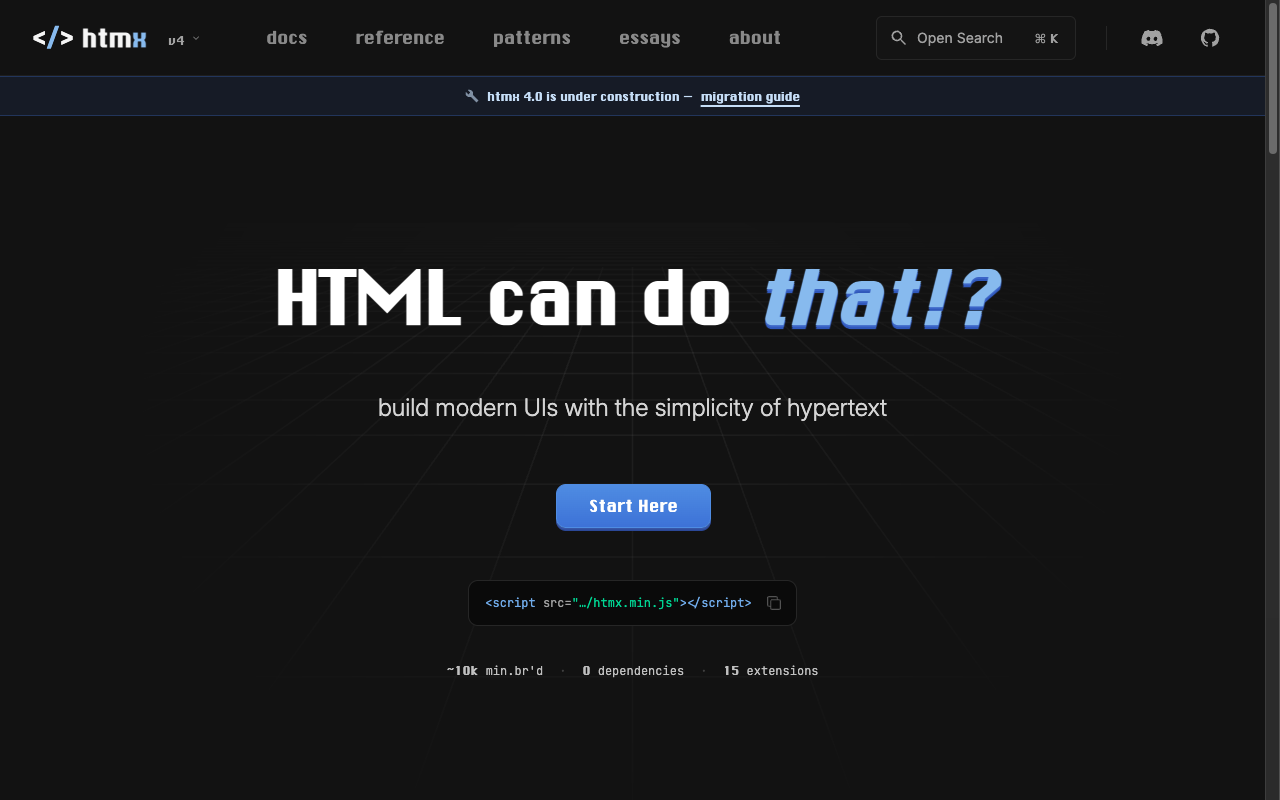
HTMX gives you access to AJAX, server-sent events, WebSockets, and CSS transitions directly from HTML attributes; no JavaScript required for most interactions. The philosophy is that hypermedia as the engine of application state is still a viable and often preferable approach to building web interfaces, and that reaching for a heavy frontend framework is frequently a choice made by default rather than by necessity.
Version 4 is a notable step forward: cleaner syntax, improved extension support, and refinements that reflect years of real-world feedback. If you’ve been watching HTMX from a distance but haven’t committed to it, the v4 documentation is the cleanest entry point the project has had. For teams already using it, the migration path is intentionally smooth. HTMX is not the right tool for every project, but for server-rendered applications where you want interactivity without the complexity of a full SPA architecture, it remains one of the most compelling options available.
Sub-Reddit to Follow: r/ClaudeCode
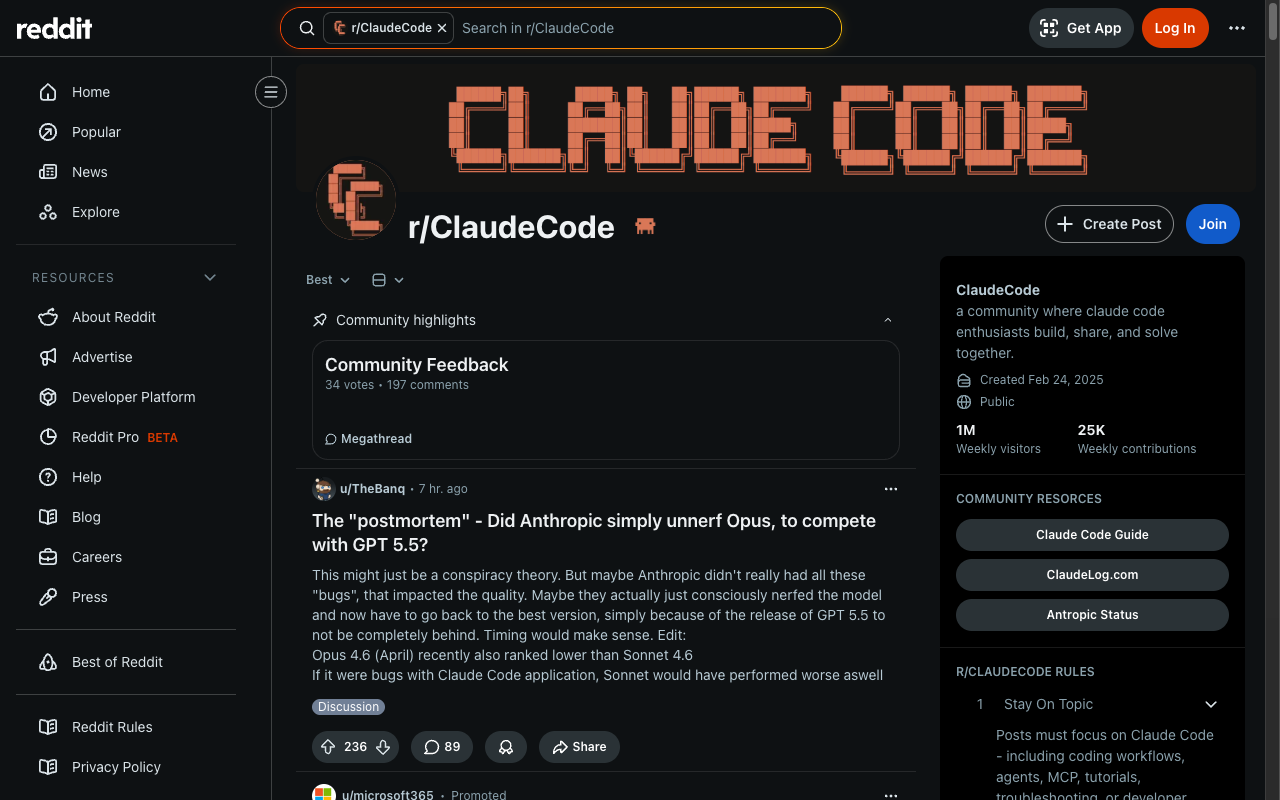
r/ClaudeCode is the growing Reddit community for developers using Claude Code; Anthropic’s agentic coding CLI. If you’re spending meaningful time in the terminal with Claude Code, this is the community to have in your rotation. The signal-to-noise ratio is high right now because the community is still relatively small and self-selected toward serious users. You’ll find real workflows, CLAUDE.md patterns, hooks configurations, MCP server setups, and conversations about where the tooling genuinely falls short alongside where it genuinely shines.
The agentic coding space is evolving faster than most documentation can keep up with. Communities like this one are often where the practical knowledge actually lives, the patterns that don’t make it into the official docs for months, the workarounds that someone figured out the hard way. Get in early while the community is focused and the posts are worth reading. It will be a larger and noisier place soon enough.
Git Repo to Star: OpenWebUI
Link: github.com/open-webui/open-webui
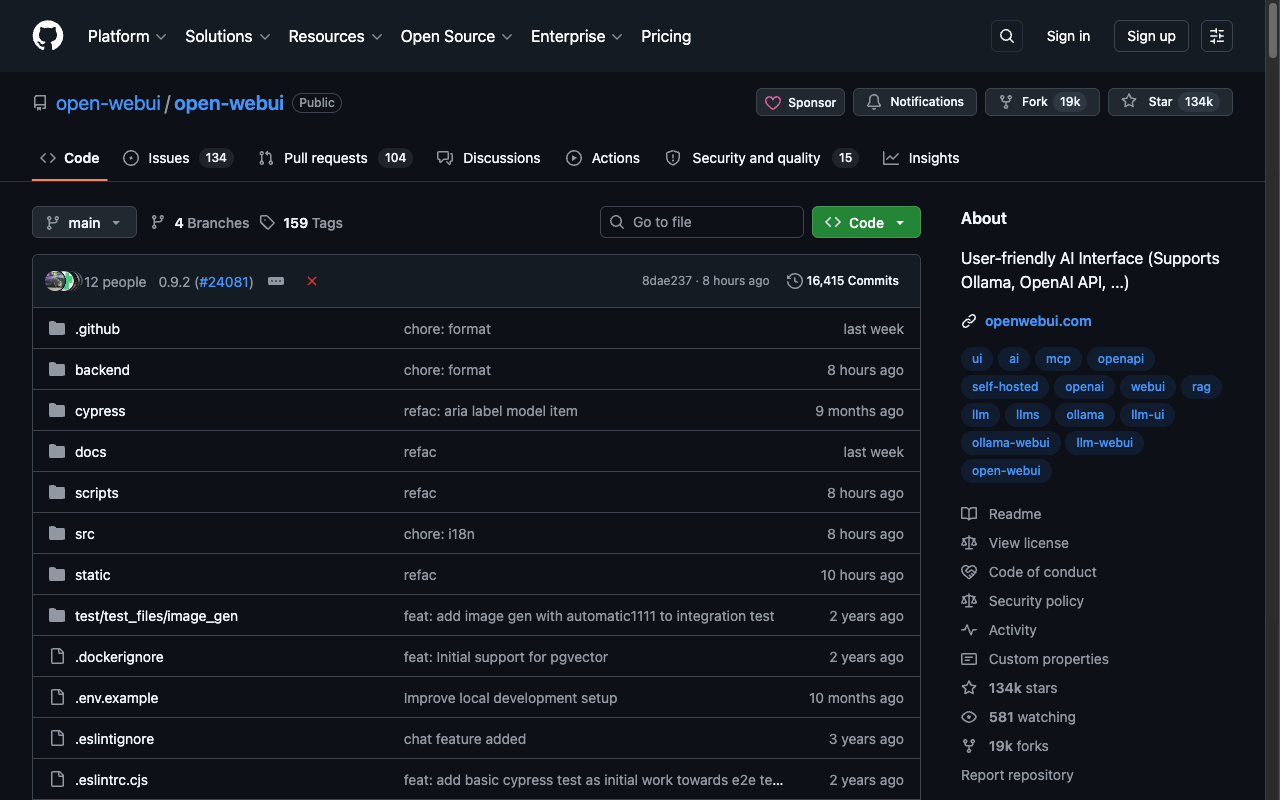
OpenWebUI has become the de facto standard for self-hosted LLM interfaces, and the star count reflects it. It connects to Ollama, any OpenAI-compatible API, and a growing list of providers, giving you a polished chat interface for local and remote models without handing your conversations to a third-party service. Features include multi-model support, document retrieval, image generation, voice input, tools and functions, and a plugin system that lets you extend it further.
If you’re running local models at all, whether for privacy, cost, experimentation, or offline work, you should already have this running. If you haven’t set it up yet, the installation is straightforward and the quality of the interface puts a lot of hosted products to shame. The project is actively maintained with frequent releases, and the community is large enough that you’ll find answers when something goes sideways. Star it. Run it. It’s the kind of open-source project that makes the ecosystem genuinely better.
Cool Project of the Week: Heerich.js
Link: meodai.github.io/heerich
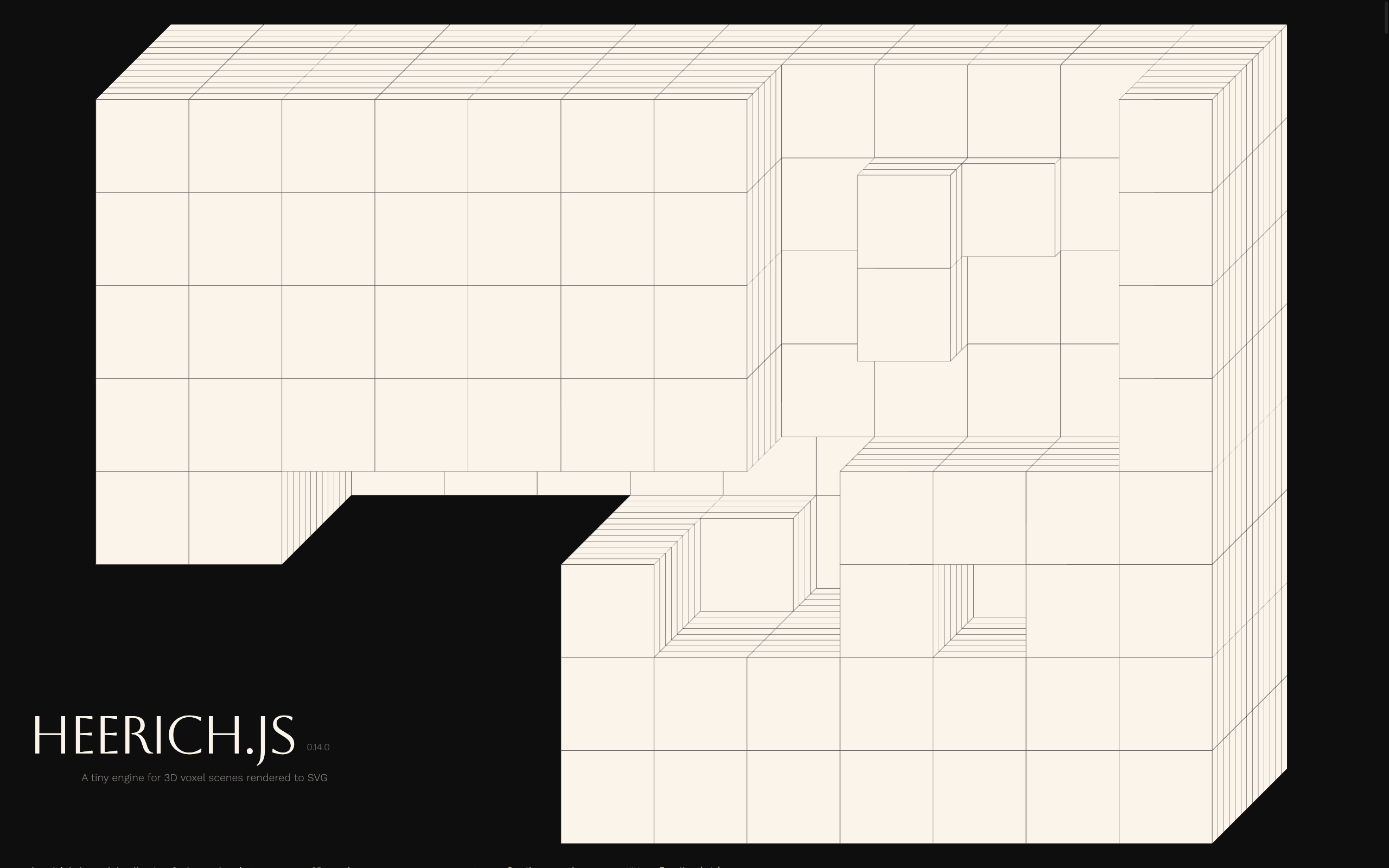
Heerich.js is a tiny JavaScript engine for rendering 3D voxel scenes as SVG. You define a scene with voxels, set a camera angle, and Heerich produces vector output that looks like isometric 3D art, rendered entirely as SVG, no WebGL, no canvas. The output is crisp at any size, animatable with CSS, and surprisingly expressive for something built on such a constrained premise.
The project comes from meodai, whose other work includes color.js and a number of creative coding experiments that share the same quality: technically minimal, aesthetically serious. Heerich won’t ship in your next production app, but it’s exactly the kind of thing you load up and spend an hour with, tweaking voxel layouts, playing with perspective, seeing what’s possible inside tight constraints. That exploration is valuable. Some of the best ideas in software come from projects that exist purely because someone wanted to see if they could build a thing. Heerich absolutely could.
That’s Issue #5 of The Product Stack. See you next week.